
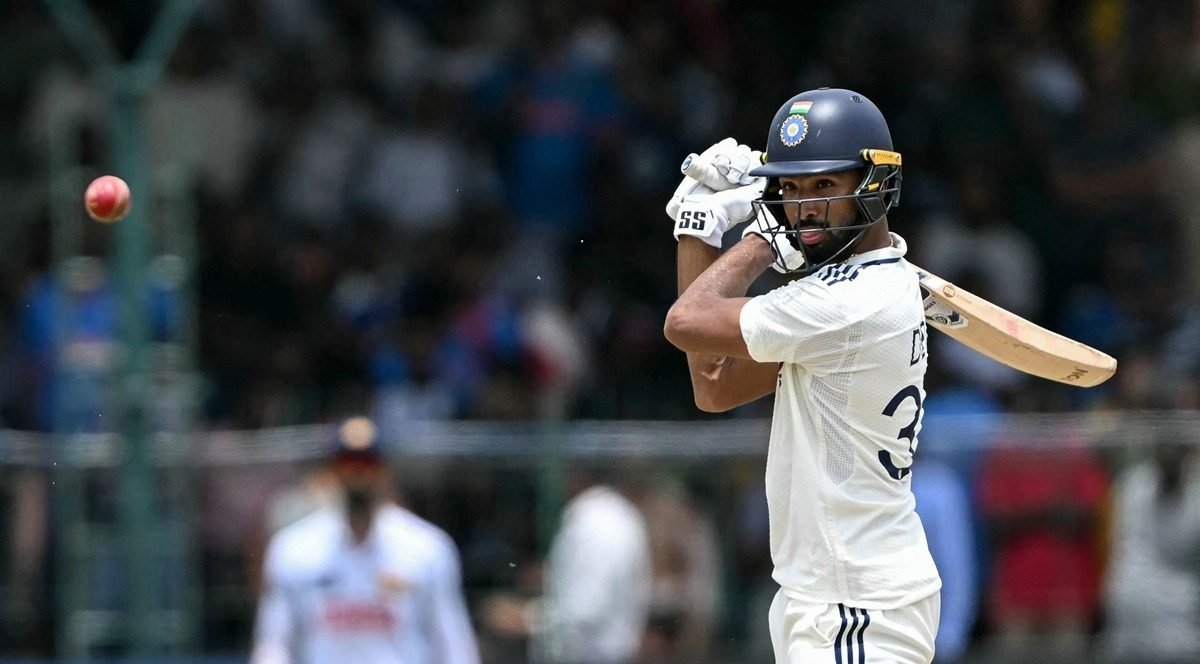
Devdutt Padikkal has emerged as a strong contender for India's No.3 batting position following his remarkable performance in the recent Test series against Sri Lanka. With two centuries to his name during the tour, Padikkal has not only showcased his talent but also highlighted the struggles faced by Indian batsmen in this crucial batting slot over the past few years.
Historically, the No.3 position has been a challenging one for India, especially in overseas conditions. Between January 2019 and the commencement of the Sri Lanka series, only Cheteshwar Pujara had managed to score a Test century while batting at one-drop outside India. During this period, Indian No.3s averaged a dismal 20.10 away from home, marking the lowest average for any Test-playing nation. This stark statistic underscores the urgency of finding a reliable batsman for this pivotal role.
Padikkal's rise comes at a time when India has experimented with various players in the No.3 position, including Shubman Gill, Virat Kohli, and KL Rahul, but with limited success. As Pujara's form waned, the Indian selectors sought alternatives, yet none could consistently deliver. Sai Sudharsan, who was initially favored for the role, suffered an injury that opened the door for Padikkal, who had been in excellent form in domestic cricket.
Before the Sri Lanka series, Padikkal had already made a name for himself with an impressive domestic season, scoring 812 runs at an average of 47.76. His form translated seamlessly into the Test arena, where he scored 167 and 117 in his first two Tests of the series. His ability to handle spin effectively stood out, as he achieved a strike rate of 65, the highest for any Indian No.3 with at least 300 runs in a series since VVS Laxman in the 2000/01 season against Australia.
Padikkal's unique approach to tackling spin has been a revelation. Traditionally, Indian batsmen are known for their proficiency against spin, but recent performances have shown a decline in this area. In the past two years, Indian batsmen struggled against spin, particularly during a disastrous home series against South Africa and New Zealand, where they faced significant challenges. Padikkal, however, has utilized his height and reach to play back to length balls effectively, forcing spinners to adjust their lengths.
This technique has allowed him to score runs while also demonstrating a level of comfort against spin that has been lacking in the Indian batting lineup. His ability to play off the back foot against spinners contrasts sharply with the more front-foot dominant approach of his teammates, making him a valuable asset in the middle order.
As India prepares for future challenges, including the upcoming Test series against formidable opponents, Padikkal's performance in Sri Lanka has filled a critical gap in the batting order. His ability to counter spin effectively will be key as India looks to build a more resilient batting lineup. With Padikkal's emergence, the debate around India's No.3 position may have found a temporary resolution, but it remains to be seen how he will fare against the world's best spin bowlers in the coming series.



Leave a Comment