
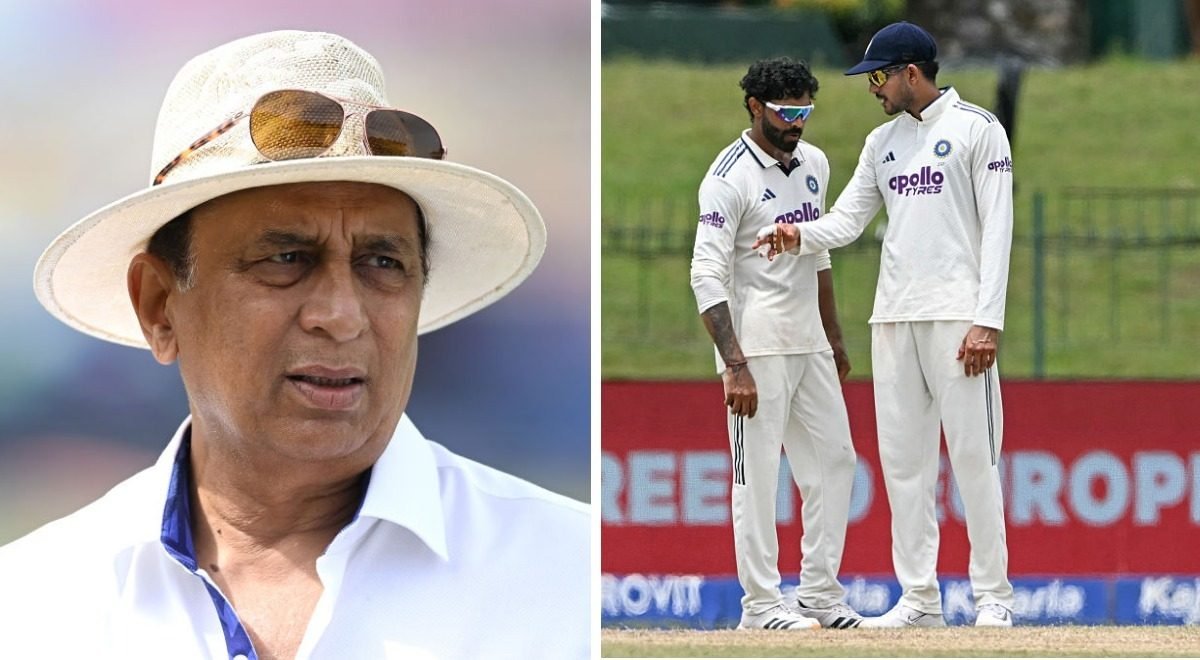
In a recent column for Mid-Day, former Indian cricketer Sunil Gavaskar voiced his concerns regarding the alarming number of no-balls bowled by the Indian team during their second Test match against Sri Lanka, which concluded in a draw. This performance not only raised eyebrows but also jeopardized India's chances of qualifying for the World Test Championship (WTC) final.
Throughout the match held in Colombo, India conceded a total of 13 no-balls, a significant contribution coming from Ravindra Jadeja and Saransh Jain, who collectively accounted for 11 of these infractions. Jadeja had also struggled with no-balls in the first Test at Galle, where he bowled four. Such repeated errors have led to serious discussions about the implications for the team’s performance and strategy moving forward.
Gavaskar emphasized the need for urgent attention to this issue, noting that the ability to control no-balls lies entirely within the players' grasp. He stated, "The no-balls being bowled by the Indian bowlers came in for a fair bit of comment. This has to be looked at urgently because it can change the colour of the game." He further pointed out that with modern technology like tape measures available for marking run-ups, there should be no excuses for bowlers overstepping the crease.
In a light-hearted moment during the series, India's spin-bowling coach Sairaj Bahutule suggested introducing free-hits in Test cricket as a means to mitigate the frequency of no-balls. However, Gavaskar disagreed with this approach, arguing that it would only make scoring easier for batsmen, which could skew the balance of the game even further. He remarked, "Please, let’s not make run-scoring easier in Test cricket for the batters with this penalty."
Instead, Gavaskar proposed a more stringent measure: implementing fines for bowlers who overstep, with the penalty doubling for each subsequent no-ball. He also suggested that the bowling coach should be held accountable, proposing that they incur half the total fines imposed on their bowlers. This innovative approach aims to instill a greater sense of responsibility among players and coaching staff alike.
Gavaskar elaborated on his idea, saying, "The fines collected can be used for the final team dinner before the boys disperse. There could be other fines too, for example, not backing up for a throw or something else not done on the field, which the whole team can vote on whether to impose or not. This can also be a fun activity and bond the team even more." This suggestion not only addresses the technical issues of no-balls but also fosters team unity through a shared accountability system.
The 13 no-balls bowled by India in the second Test marked an unwanted milestone, placing it among the top instances of no-balls bowled by the team in a Test match this decade. It ranks ninth on the list since 2020, highlighting a concerning trend that the Indian bowling unit must rectify as they progress through the international cricket calendar.



Leave a Comment