
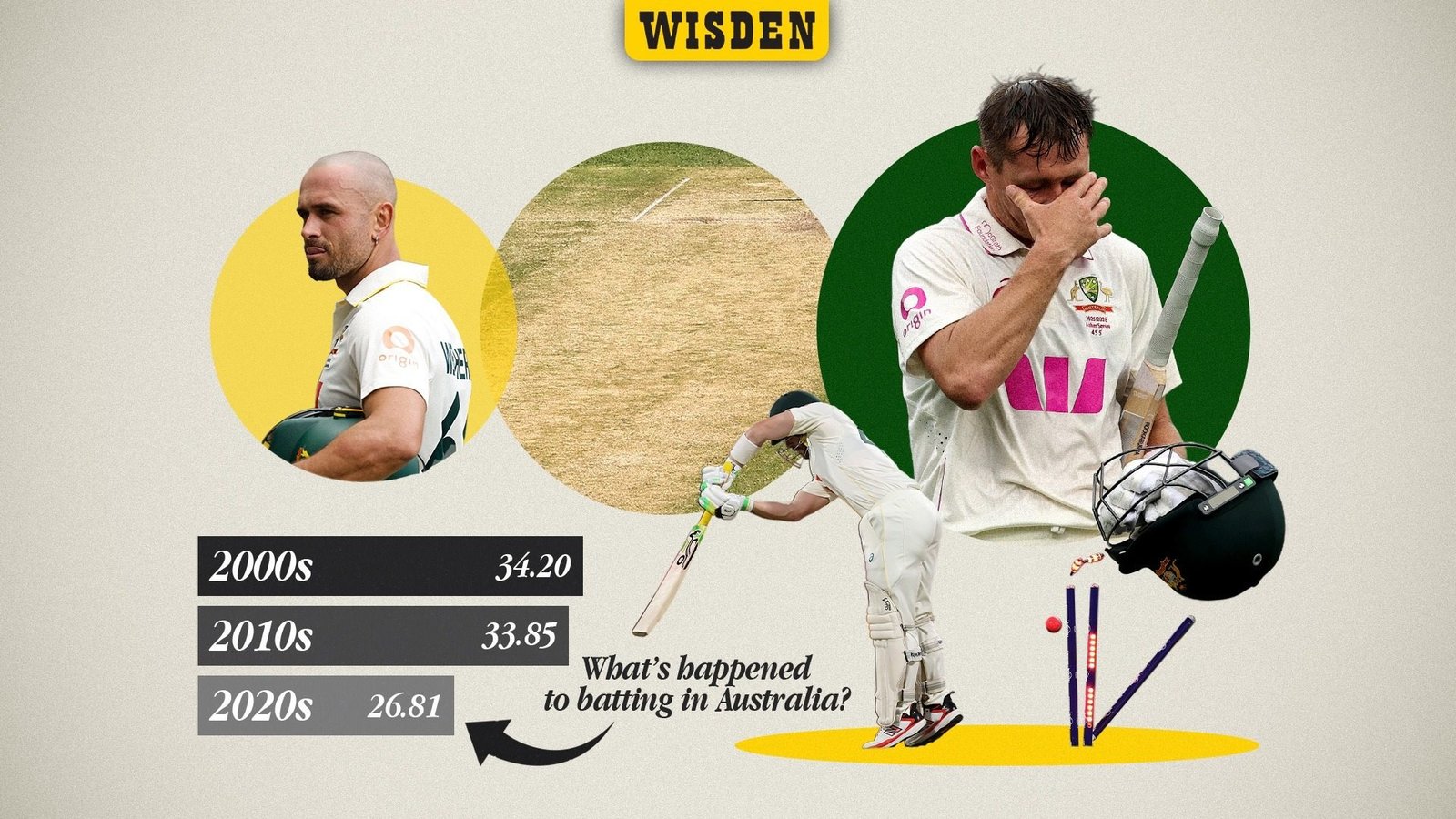
In recent years, the landscape of batting in international cricket, particularly in Australia, has undergone a notable transformation. The contrast between the explosive scoring seen in T20 cricket and the struggles faced by batters in Test matches has become a point of discussion among players and analysts alike. Josh Hazlewood, an experienced Australian bowler, has highlighted this shift, suggesting that a batting average of 35 today may equate to an average of 45 from a decade ago due to the changing nature of the game.
Hazlewood's insights are particularly relevant as he has witnessed these changes firsthand. The Australian conditions have become increasingly challenging for batters, a trend that has been underscored by recent statistics. Since 2022, four of the last 20 Test matches played in Australia have concluded within two days—a stark contrast to the historical norm, where such quick finishes were exceedingly rare. The last instance prior to 2022 occurred in 1931, indicating a significant shift in the playing conditions.
While four rapid matches alone do not conclusively prove a fundamental change in batting standards, a broader examination of the statistics reveals a concerning trend. The Sheffield Shield, Australia’s premier domestic first-class competition, has seen a dramatic decline in batting averages. In the 2010s, the average was 29.19, which rose to 32.25 in the 2014/15 season but plummeted to 25.87 by 2023/24. This decline is accompanied by a slight decrease in strike rates, suggesting that batters are finding it increasingly difficult to score runs consistently.
The situation is even more pronounced in Test cricket, where batting averages in Australia peaked at 43.49 in 2015 but have since fallen to 33.15 by 2019 and continue to decline. This trend indicates that while batters may be attempting to score at similar rates as before, the outcomes are resulting in fewer significant innings. The Sheffield Shield statistics further illustrate this change, with first-innings averages dropping significantly in recent seasons.
Moreover, the overall bowling averages have improved, with bowlers now averaging 26.96 compared to 33.76 in 2014/15. This nearly seven-run improvement for bowlers correlates with the decline in batting averages, leading to fewer runs scored per dismissal. The top run-scorers in recent seasons have also struggled to maintain the high averages seen in previous years, indicating a broader issue affecting batting performance.
The first 30 overs of a Test innings have become particularly challenging for batters in Australia. Recent data shows that teams have struggled to average 25 runs during this phase, a stark contrast to earlier seasons where averages were significantly higher. Hazlewood and fellow players have pointed to the introduction of a redesigned Kookaburra ball as a contributing factor, alongside changes in pitch conditions that have made batting more difficult.
The quality of opposition bowling attacks has also improved, with more teams averaging below 35 in their bowling performances during Test series in Australia. This shift indicates a broader enhancement in pace-bowling quality, making it increasingly tough for batters to find their footing. As a result, the threat from bowlers persists even after the new ball has softened, limiting opportunities for batters to capitalize on scoring.
Despite the challenges, Australian batters have shown resilience. While their individual averages have declined, they have managed to maintain a competitive edge over their opponents, with a team batting average of 31.63 since 2020 compared to 24.13 for their rivals. This statistic highlights Australia's ability to adapt and remain productive in a challenging environment.
In conclusion, while Hazlewood's assertion that an average of 35 may represent the new 45 holds some validity, it is clear that batting in Australia has become increasingly difficult. The combination of improved bowling, changing pitch conditions, and the evolving nature of the game has created a landscape where scoring runs is more challenging than ever. As the cricketing world continues to evolve, the ability of batters to adapt to these conditions will be crucial for their success.



Leave a Comment